
Understanding Diabetes and How It Develops
Glucose is an important source of energy for the body. Insulin, a hormone produced by the pancreas, helps glucose move from the bloodstream into cells, where it can be used for energy.
In people with diabetes, this process does not work normally. In type 1 diabetes, the body’s immune system attacks the insulin-producing cells in the pancreas, resulting in little or no insulin production. People with type 1 diabetes require insulin replacement to manage their blood glucose levels. Type 2 diabetes occurs when the body becomes less responsive to insulin and, over time, may not produce enough insulin to maintain healthy blood glucose levels. Gestational diabetes develops during pregnancy and requires appropriate monitoring and medical care.
Type 2 diabetes is the most common form. Its development can be influenced by several factors, including family history, excess body weight, physical inactivity, age, and other metabolic risk factors. However, diabetes can occur in people with different body types and lifestyles, so symptoms and potential risk factors should not be ignored.
Common Symptoms and Early Warning Signs of Diabetes
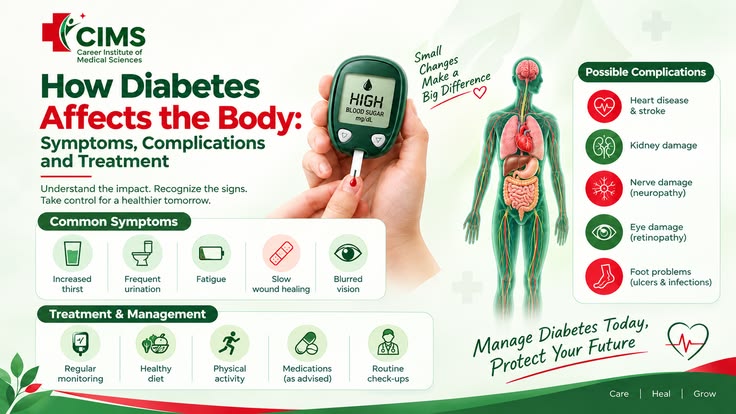
Diabetes does not always produce obvious symptoms, particularly during the early stages of type 2 diabetes. Some people may have elevated blood glucose levels for a considerable period before they realise that something is wrong.
Common symptoms can include:
- Increased thirst.
- Frequent urination.
- Unusual tiredness.
- Blurred vision.
- Unexplained weight loss.
- Increased hunger.
Because symptoms alone cannot confirm diabetes, appropriate blood glucose testing is important when diabetes is suspected or when a person has significant risk factors.
How Diabetes Can Affect Different Parts of the Body
Persistently high blood glucose can gradually damage blood vessels and nerves. This is why diabetes can affect several organs rather than remaining only a blood sugar problem.
Heart and Blood Vessels
Diabetes is associated with a higher risk of cardiovascular disease. Persistently elevated blood glucose can contribute to damage within blood vessels and may occur alongside other risk factors, such as high blood pressure and abnormal cholesterol levels.
Managing blood glucose together with blood pressure, cholesterol, weight, and other cardiovascular risk factors is therefore an important part of comprehensive diabetes care.
Kidneys
The kidneys filter waste products from the blood. Long-term diabetes can damage the small blood vessels within the kidneys, potentially leading to diabetic kidney disease.
Regular assessment of kidney health can help identify changes at an earlier stage. People living with diabetes may need periodic blood tests to assess kidney function and urine tests to check for signs of kidney damage, as recommended by their healthcare professional.
Eyes
Diabetes can damage the small blood vessels supplying the retina, a condition known as diabetic retinopathy. In advanced cases, this can affect vision and may lead to permanent vision loss.
Regular eye examinations are important because retinal changes can develop before noticeable vision problems occur. Early detection allows appropriate treatment or referral when necessary.
Nerves
Long-term high blood glucose can damage nerves, particularly those in the feet and legs. Diabetic neuropathy may cause burning, tingling, numbness, pain, or reduced sensation.
Reduced sensation can make it difficult to notice small cuts, blisters, or injuries. For this reason, regular foot checks and appropriate foot care are important parts of diabetes management.
Feet and Wound Healing
Diabetes can affect both nerves and blood circulation. When these problems occur together, even a minor foot injury may become difficult to heal and can develop into an ulcer or infection.
People with diabetes should take persistent wounds, changes in skin colour, swelling, unusual warmth, or reduced sensation seriously. They should seek medical advice promptly rather than delaying care.
Diabetes Diagnosis and Important Blood Tests
Diabetes is diagnosed using blood glucose measurements rather than symptoms alone. Depending on the clinical situation, healthcare professionals may use tests such as fasting plasma glucose, oral glucose tolerance testing, HbA1c, or random blood glucose testing.
HbA1c is particularly useful because it provides an indication of average blood glucose levels over approximately the previous two to three months. However, certain medical conditions can affect the accuracy of this test. The appropriate test and interpretation depend on the patient’s circumstances, so results should be assessed by a qualified healthcare professional.
Early diagnosis is important because type 2 diabetes can sometimes remain unnoticed while high blood glucose gradually affects the body.
Diabetes Treatment and Long-Term Management
There is no single treatment plan that works for every person with diabetes. Management depends on the type of diabetes, blood glucose levels, age, overall health, existing complications, and other individual factors.
Healthy Eating and Physical Activity
A balanced eating pattern and regular physical activity are important components of diabetes management. Dietary planning should focus on appropriate portions, nutritional quality, and a sustainable routine rather than following extreme diets.
Regular physical activity can also support blood glucose control, cardiovascular health, and weight management. The type and intensity of exercise should be appropriate for the person’s health condition.
Medicines and Insulin Therapy
Some people with diabetes require medication to maintain appropriate blood glucose levels. Treatment may include oral or injectable medicines, while people with type 1 diabetes require insulin.
The choice of medication depends on the individual’s condition and may change over time. Diabetes medicines should be taken according to medical advice rather than started, stopped, or changed independently.
Regular Monitoring
Diabetes management involves more than checking blood sugar occasionally. Depending on the patient’s condition, regular monitoring may include blood glucose assessment, HbA1c testing, blood pressure checks, cholesterol evaluation, kidney assessment, eye examinations, and foot evaluations.
This broader approach helps identify complications early and allows treatment plans to be adjusted when required.
Preventing or Delaying Diabetes-Related Complications
Good diabetes care focuses not only on controlling blood glucose but also on protecting the organs that can be affected over time.
Maintaining appropriate blood glucose levels, staying physically active, following a balanced diet, avoiding tobacco, and managing blood pressure and cholesterol can help reduce health risks. Regular screening of the eyes, kidneys, and feet is also important for people living with diabetes.
People who already have diabetes should not wait for symptoms before undergoing recommended follow-up examinations. Some complications can develop without noticeable warning signs, making regular screening and medical monitoring especially important.
Comprehensive Diabetes Care
Diabetes requires an individualised approach because the condition can affect multiple aspects of health. At Career Hospital, patients can seek medical evaluation and ongoing care according to their individual healthcare needs.
A comprehensive approach to diabetes includes understanding blood glucose levels, assessing associated risk factors, monitoring for complications, and making appropriate treatment decisions. When additional specialist evaluation is required, coordinated medical care can help address complications affecting organs such as the heart, kidneys, eyes, or nerves.
Patients should discuss their symptoms, medical history, current medicines, and test results with their healthcare professional so that the most appropriate care plan can be determined.
Understanding the Importance of Long-Term Diabetes Management
Diabetes is much more than a condition involving high blood sugar. Over time, uncontrolled or poorly managed diabetes can affect the heart, blood vessels, kidneys, eyes, nerves, and feet. However, early diagnosis, appropriate treatment, regular monitoring, and sustainable lifestyle changes can significantly reduce the risk of serious complications.
Understanding how diabetes affects the body can help patients take their health more seriously and recognise why regular medical follow-up matters. Whether someone has recently been diagnosed or has been living with diabetes for years, ongoing professional guidance can help support better long-term management.
Lets highlight your brand?
Promote your article on Publcity to showcase your business, expertise, services or ideas.
Explore Sponsored Publishing Options → Promote your existing article choose our Write-for-you option.Submit Free Guest Posts
Have an original story, useful insight or professional perspective to share? Publcity welcomes contributions across Business, Marketing, Technology, Travel and Culture.
Review the submission guidelines before sending your article.