

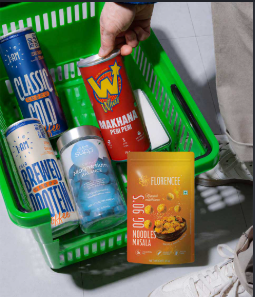
Launching one successful consumer product is difficult. Building a brand that can support ten, twenty or even fifty products is an entirely different challenge.
Many FMCG businesses begin with a small range. A beverage company might launch with two flavours. A food startup may begin with a single category. A personal-care company could enter the market with only one hero product.
At this stage, branding decisions can appear relatively simple.
But as the business grows, every new flavour, variant, package size and category creates another design decision. Without a clear system, the brand can quickly become inconsistent.
This is why businesses working with an experienced FMCG Brand Design Agency often focus not only on creating attractive packaging, but on building a brand system that can expand without losing recognition.
A Brand Is More Than One Package
A common branding mistake is designing the first product as an isolated object.
The packaging may look attractive and work well for the initial launch, but problems emerge when a second or third product needs to be added.
Should the new variant use a different colour?
Should the typography change?
How much of the original pack should remain consistent?
Where should flavour or product names appear?
Without established rules, each new product may begin looking like a separate brand.
A scalable identity solves this problem by defining which elements remain constant and which elements are flexible.
Establish Recognisable Brand Assets
Consumers rarely study FMCG packaging carefully.
They scan.
This makes distinctive visual assets especially important.
These may include a consistent logo position, typography style, color system, graphic device, illustration style or packaging structure.
The objective is to create familiar signals that allow customers to recognize the brand quickly.
For example, individual flavours may use different colours while the brand name, typography hierarchy and overall packaging architecture remain consistent.
The consumer gets enough variation to distinguish products without losing the connection to the parent brand.
Build a Clear Packaging Hierarchy
Packaging has limited space but often needs to communicate a large amount of information.
Consumers may need to understand:
- the brand,
- product type,
- flavour or variant,
- key benefit,
- quantity,
- product claims,
- and supporting information.
If everything receives equal visual importance, the result can feel cluttered.
A good design system defines hierarchy.
The brand should be visible. The product should be identifiable. Important differentiators should be easy to understand.
Secondary information can then support the purchase decision without competing with the main message.
This becomes even more valuable when the brand expands because the same hierarchy can be repeated across the range.
Design for Shelf and Screen
FMCG branding today has to work in both physical and digital environments.
A package may appear full-size in a supermarket but only as a small thumbnail on an ecommerce or quick-commerce platform.
This creates an important design challenge.
Fine details that look impressive on a large pack may disappear completely on a mobile screen.
Brands should therefore test packaging at realistic digital sizes.
Can the brand name still be read?
Can the product variant be identified?
Does the pack remain distinctive beside competitors?
A scalable system needs to work wherever customers encounter the brand.
Avoid Redesigning Every New Variant
When there is no established design system, teams often treat each new launch like a completely new branding project.
That slows expansion and creates unnecessary inconsistency.
A structured system makes future product development easier.
It can establish rules for:
- logo placement,
- typography,
- product naming,
- flavour colours,
- claims,
- photography,
- illustrations,
- and information hierarchy.
Designers then have a framework rather than starting from zero every time.
This does not eliminate creativity. It gives creativity a structure.
Use Variation Strategically
Consistency does not mean every package has to look identical.
Too much uniformity can make individual products difficult to distinguish.
A better approach is controlled variation.
Consider a snack brand with six flavours.
Each product might have its own colour and ingredient imagery. At the same time, the logo, typography, structural layout and key graphic elements remain consistent.
The consumer can quickly understand both pieces of information:
“This is the same brand.”
“This is a different flavour.”
That balance between familiarity and distinction is one of the most useful functions of a strong FMCG design system.
Think Beyond Packaging
Brand systems should also extend beyond the physical product.
The same visual identity may need to work across:
- ecommerce marketplaces,
- websites,
- social media,
- digital advertisements,
- retail displays,
- catalogues,
- sales presentations,
- and promotional campaigns.
If each channel uses a different visual language, the brand becomes harder to recognise.
Consistency across these touchpoints helps strengthen familiarity.
Prepare for Future Categories
A good identity should also consider where the business may go next.
A company starting with beverages might eventually introduce mixers, snacks or wellness products.
A food brand could expand into multiple product categories.
The brand should not be so narrowly designed that every expansion requires a complete visual reset.
This does not mean predicting every future product.
It means creating enough flexibility for the brand to evolve.
Growth Makes Consistency More Valuable
As a company expands, more people become responsible for representing the brand.
Internal marketing teams, external agencies, ecommerce managers, printers and retail partners may all work with brand assets.
Clear guidelines reduce inconsistency.
They also make decisions faster because teams do not need to interpret the brand from scratch.
This is where branding begins to function as an operational system rather than just a visual exercise.
Building a Brand That Can Grow With the Business
Successful FMCG brands are rarely built around one attractive package.
They are built around systems that can support new products, new channels and new customer interactions while remaining recognisable.
A scalable brand identity helps businesses maintain consistency without sacrificing flexibility.
For growing consumer brands, that foundation can make product expansion clearer, faster and far more cohesive.
About Author
DN Designs is a creative branding and design agency specialising in brand strategy, visual identity, packaging design and consumer-focused brand experiences. The team helps businesses create clear and scalable brand systems designed to support recognition and long-term growth.
Website: https://dndesigns .co.in/
Publish Your Article & Build Backlink Authority on Publcity
Looking to expand your digital reach, boost your search engine rankings, and secure high-authority backlinks? Publcity welcomes guest authors, brands, and SEO agencies to contribute premium articles. Get your content indexed, build domain authority, and tap into a global audience.
We accept original, do-follow contributions in Business, Marketing, Technology, Travel, and Culture.
Write for UsRead our Guest Posting Guidelines & Submit Your Draft Today!